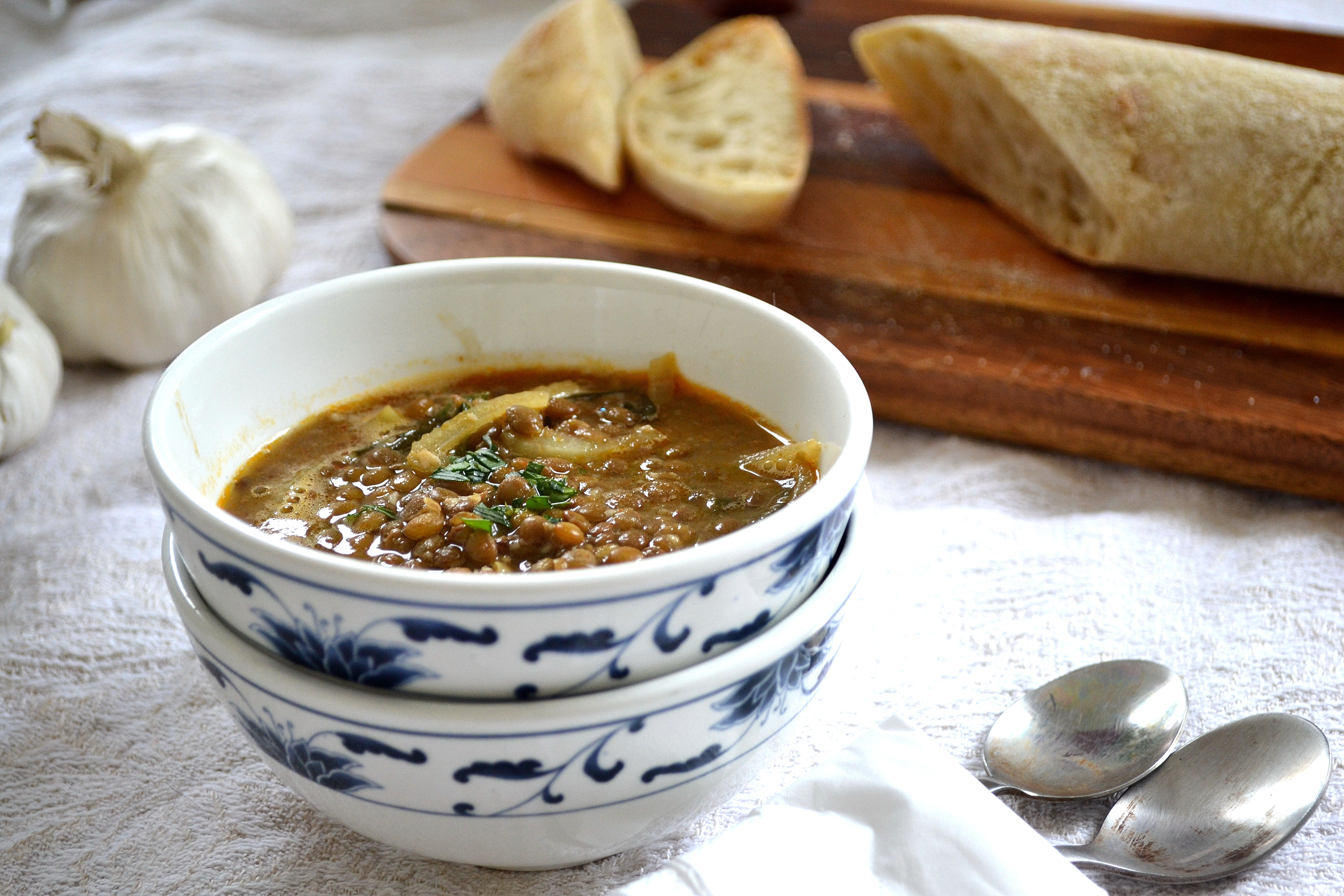
 There are few flavour combinations that I like so well as garlic and paprika. Married to one another, garlic and paprika have a greater-than-the-sum-of-their-parts appeal, a briny, lingering, and distinctive aroma and flavour that work equally well with seafood and meat, with pulses and with vegetables. I am, of course, immensely fond of Spanish food, which some might say has its foundations in this happy union. Paprika, or pimentón, supposedly was brought to Spain from the Americas by Christopher Columbus, and it has become such an integral part of Spanish food that in Spain, paprika is rigorously regulated for quality, with denominations of origin, like wine and olive oil. When cooking with paprika, invest in high-quality Spanish paprika (it makes such a difference), and keep both sweet and smoked in your cupboard – you’ll use both. Continue reading
Garlic and Puy Lentil Soup with Smoked Paprika and Spicy Greens
14


 Susan eats London