Duck Tagine with Quince and Apricots

A very dear friend once said to me, after I’d served her a pigeon salad with orange and figs, “Susan, you pair meat with fruit more than anyone I know.” This is one of my favourite observations anyone has ever made about my cooking, and it is true that I love to pair meat with fruit.  That same friend is imminently expecting her first child, and I have been happily making and freezing meals for her and her partner in anticipation of their first couple of weeks at home with the baby. (I was born for this kind of task.) A few weeks ago, at Borough Market, which ordinarily is one of the most expensive food markets in London, I picked up three quinces for a pound. Earlier this week, I pounced on some Gressingham duck legs, which had been discounted at Waitrose. Gressingham duck is a cross between a wild mallard and a pekin duck, which means that it is a little bit less fatty than most duck you find in supermarkets, and its meat has a more gamey flavour. I use it whenever I can find it. Yesterday I emailed my friend, “I’m cooking you meat with fruit!”

This recipe is adapted from a lamb tagine I found in my favourite Moroccan cookbook, the marvellous Food of Morocco by Tess Mallos. Duck legs are browned in butter and then slowly stewed with saffron, coriander, ginger, onion, and cinnamon, and finished with meaty, tangy quince and sweet dried apricots. Crushed red pepper adds just a hint of heat. I’d never cooked with quince before, although membrillo, the thick plum-coloured quince paste sold in Spain by the slab and served with salty cheeses, is one of my guilty pleasures. (You can find a recipe for membrillo here.) The fruit is very hard and has a dry tang to it (i.e., is not to be eaten raw), but when cooked becomes soft and tender, almost like cooked pear, and takes on a dusky pinky-orange hue. It’s perfect with meat. Continue reading

Rabbit Ragu

For a long time I didn’t ‘get’ rabbit. “It tastes just like chicken,” people told me. Why not eat chicken, then, I wondered. It was like frog’s legs (which, by the way, taste like chicken only if one imagines one’s chickens cold-blooded and amphibious). I.e., it seemed to me like bourgeois foodie one-upmanship. And there’s the cute factor. When I tweeted about making this ragu, someone replied mournfully that their father had killed their pet rabbit and they never got over it. I too had a pet bunny as a child, and I have cats, and the little rabbit carcasses uncomfortably remind me of my kitties. But if you are a carnivore, wild rabbit is about the most sustainable meat you can eat. Rabbits breed, well, like bunnies (apparently a wild rabbit will have five to six litters a season), unlike most animals we eat they spend their whole lives outdoors, they are killed humanely, and the meat consists entirely of lean white-meat protein. Rabbit beats all or almost all other lean meats for protein to fat ratio. In the UK, you can buy a whole two to three kilo wild rabbit for about £4, which, considering that nearly all of that is usable meat, is extraordinarily good value for those of us trying to cook well on a budget. And rabbit doesn’t really taste like chicken, any more than monkfish tastes like lobster.

When I’m cooking lean gamey muscular meat, I like to do three things to it, usually in this order: marinate it; braise it; and stew it. It’s a lengthy process, but once you’ve determinedly battered at the collagens with low, slow cooking, the meat relaxes, absorbs all the delicious braising juices, and attains mythic proportions of deliciousness. The first time I cooked a rabbit ragu I was astonished by how flavourful it was. The meat stood up to the rich sauce, maintaining its density and distinct, subtle flavour. The first time I cooked a rabbit ragu was also the first time I jointed a rabbit. Nobody had ever showed me how, and it’s possible that actual butchers and chefs would throw up their hands in disgust at my efforts, but it wasn’t too difficult.

When you are buying a rabbit (if you’re motivated by environmental concerns, do cook wild rabbit – farmed rabbits have almost the same impact on the environment as farmed chickens), look for a rabbit with firm, dark-pink flesh and a sweet smell. Rabbits shouldn’t smell particularly gamey. You probably will start out with something that looks like this (tender-hearted vegetarians, don’t read further; this blog post has bunny carcass photos): Continue reading

Moroccan Stewed Pumpkin with Chickpeas and Preserved Lemon

I have been feeling Blog Guilt lately (as a nice Jewish girl, I am good at guilt, especially over pointless things) because I haven’t posted any vegetarian recipes for a while. But, vegetarians, this recipe is a delicious vegetarian gem. It is one of those recipes that you feed to ignoramus meat eaters and say “take that!” and they say, “I didn’t realize vegetarian cooking could be so tasty!” and you smile smugly and maybe you tell them it is vegan just to really mess with their heads. This recipe came about as a happy kitchen accident, which is my favourite kind. There was The Pumpkin which I bought on impulse because it was an exciting blue-gray colour, and then there was the sack of onions that I bought with the vague idea of making onion jam. And the rest, as they say, was delicious. Continue reading

Another Roll in the Allium (More Wild Garlic Recipes)

Unless you’ve been under a rock or you live in the Southern hemisphere, you probably know that wild garlic is currently in season. Wild garlic, called wild leeks or ramps in the United States, is annoyingly but deservedly trendy. It is (a) delicious; (b) beautiful; and (c) did I mention delicious? As I discovered, it also freezes beautifully; although the leaves lose their structural integrity, they maintain their colour and pungent flavour. To freeze wild garlic, simply chop finely or puree in a food processor, pack in a Tupperware, and pop in your freezer.

Perhaps, like me, you were lucky enough to “find” wild garlic actually growing wild, and you greedily picked way more than you could possibly use at once. (It still counts as finding it if someone else found it first and showed you where, right?) Or maybe you bought a bunch at a Farmers Market, used some leaves in a recipe, and now are wondering what the heck to do with the rest. Or maybe you just need a little inspiration. Whatever your need, here are three lovely things to do with wild garlic when you’re at a loss. For what it’s worth, all of these recipes were made using wild garlic that I had previously frozen. Continue reading

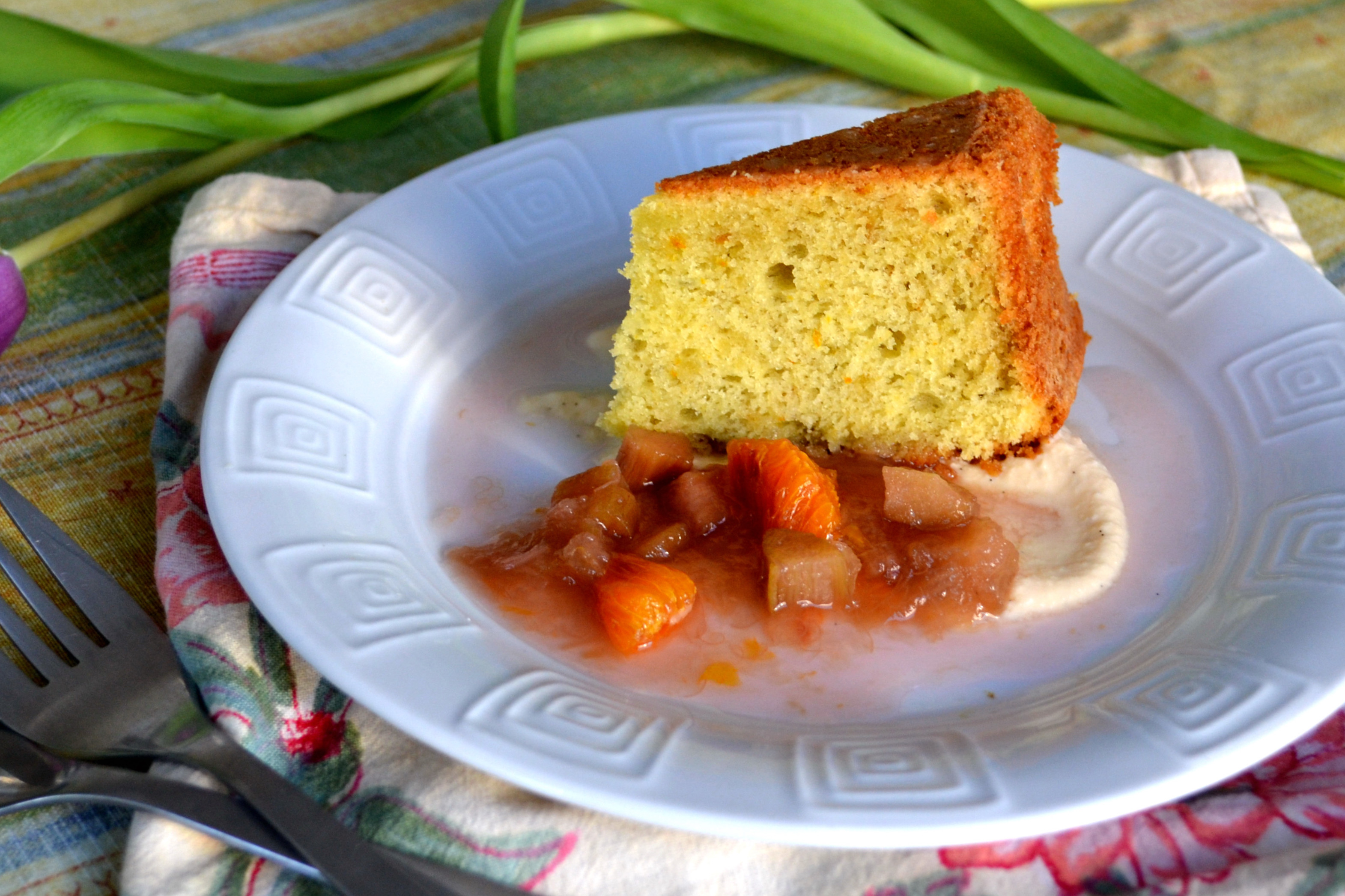
Blood Orange Olive Oil Cake with Rhubarb-Blood Orange Compote and Creme Anglaise

Olive oil cake is a baking miracle. Those of us (like me) who are used to classic French baking techniques reflexively think of olive oil as a savoury ingredient only. But when olive oil is substituted for butter in cakes, it produces a moist cake with a dense crumb and an incredibly light, fluffy texture, almost like an Asian sponge cake. It’s cake perfection. Since I started baking olive oil cakes, I’ve been playing with various combinations of flavours and ratios of olive oil and flour and eggs and sugar, and this cake is unquestionably my favourite: it’s the lightest and most delicate. Continue reading

Foraging and Cooking with Wild Garlic

Last week a new friend of mine, Nicola (a brilliant cook and blogger in her own right), crowed on Twitter about a recent discovery: she’d found loads of wild garlic at a Secret Location. I immediately demanded to be taken to the spot. She agreed, but not before exacting a “wild garlic tax” (some of my orange-blossom-saffron-vanilla macarons). It was an easy trade. I adore wild garlic. Wild garlic, also known as ramps, wild leek, and wood leek, grows in cool damp woody areas. Its colour is strikingly chlorophyll green and it’s got a sharp allium flavour and intense aroma. It’s gorgeous stuff. Monday, the appointed day, was cool and very wet. Nicola picked me up from an Overground station, her sweet and excitable dog, Toro, in the back of the car, and drove us to the Secret Location, a lovely wooded path Somewhere In London. Continue reading

Orange Blossom-Saffron-Vanilla Macarons

I consider myself to be a fairly proficient baker, but I’ve always been intimidated by macarons. They are so dainty and beautiful, so difficult to get right, and so easy to get horribly wrong. I’ve had dreadful macarons at very posh restaurants.  I don’t care what anybody says, but it IS surprisingly hard to find a good macaron in the United States. On one memorable occasion I even had inferior macarons from Ladurée. And as for achieving perfection at home and hitting every note – the flawless shiny smooth patina on the shell, the well-risen feet, the ever-so-slightly crisp shell and perfectly yielding, tender interior . . . there is just so much to bollocks up. (I’d use a ruder word, but this is a family friendly site.) Literally for months I stalked macaron recipes online. There are hundreds, if not thousands. And SO much advice, much of it conflicting. To Italian meringue, or not to Italian meringue? Should I age my egg whites? What about the almond flour? Should I grind my own and/or air-dry it? Continue reading

Dabbous

When I announced to a friend that I had a reservation at the hardest table to book in London, I am sure there was a note of unholy glee in my voice.  “What, the Ledbury?” he asked. “No,” I said. “Dabbous.”

In the few short months that Dabbous has been open, the cascade of glowing reviews from London’s most difficult-to-please critics has been followed by extraordinary hype. Giles Coren pretty much sealed the fate of London diners with his rapturous write-up in the Times (which I still haven’t been able to read in its entirety thanks to the Times’ pay-wall). I hear that the wait for a table is now several months long. Nevertheless, when I idly clicked through Open Table on Sunday trying to book a table for four in May (no luck), to my utter surprise there was a table available for two people that Tuesday. The decision required no reflection. I booked it immediately and invited reliable fellow-lover of decadent dining experiences V to join me. Continue reading

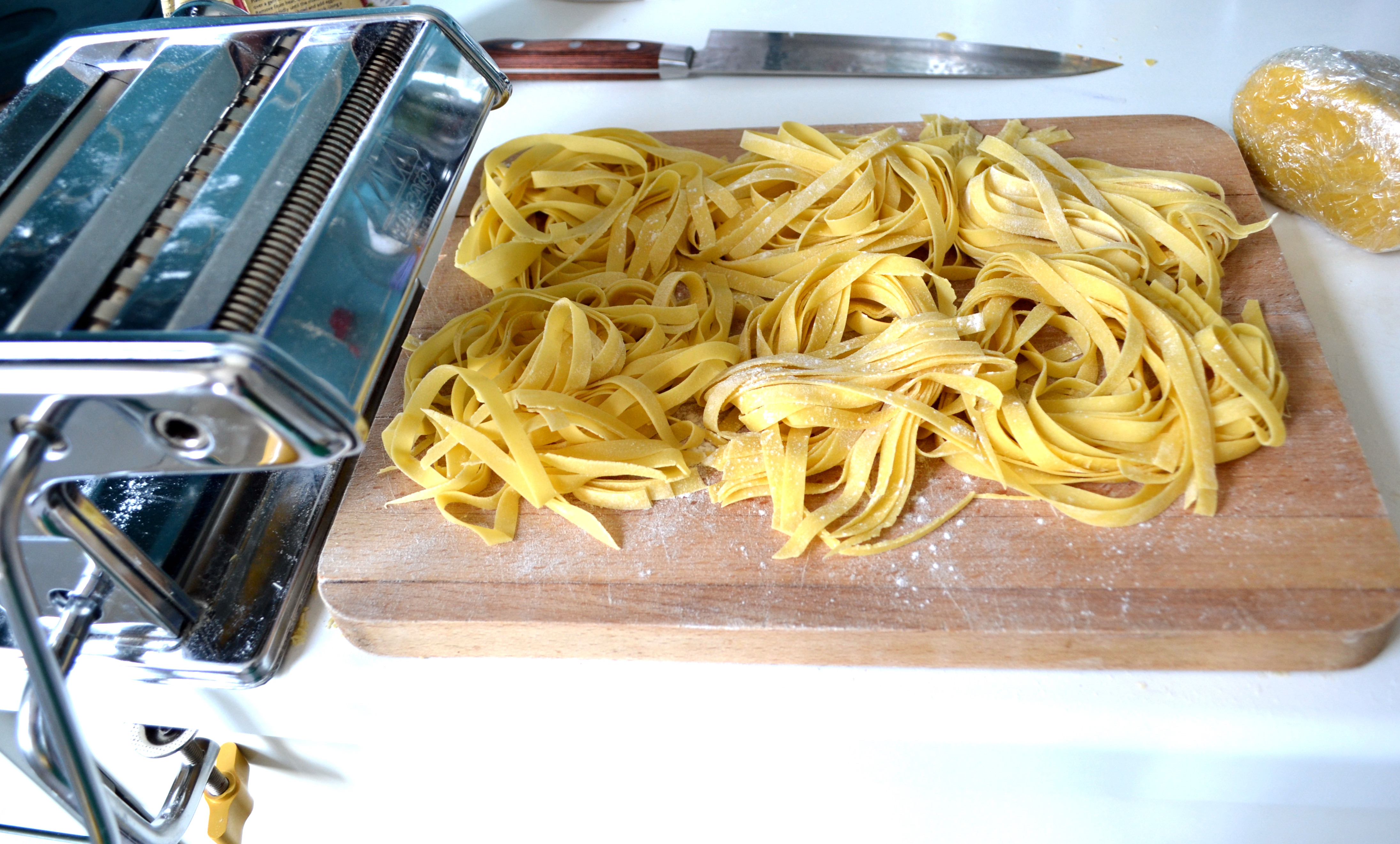
Duck Egg Pasta

I have already shared my stock fresh pasta method on this blog, but for the past few weeks I’ve been thinking a lot about making pasta using duck eggs. It is a simple truth: DUCK EGGS MAKE EVERYTHING BETTER. I have a friend who, when he dines out, literally cannot resist any menu item that includes a duck egg. For once I’m not talking about myself – but I too am enthralled by duck eggs. I love the iron richness of duck egg yolk and the way the yolk is so much more unctuous, so silky and luxurious, compared to the yolk of a hen’s egg. When you add a duck egg to something, the egg is the thing: it’s not just a garnish; it becomes the centrepiece of a dish.

Fresh pasta is best if it’s made with really nice eggs, so it stands to reason that it would be even more delicious made with duck eggs. Continue reading

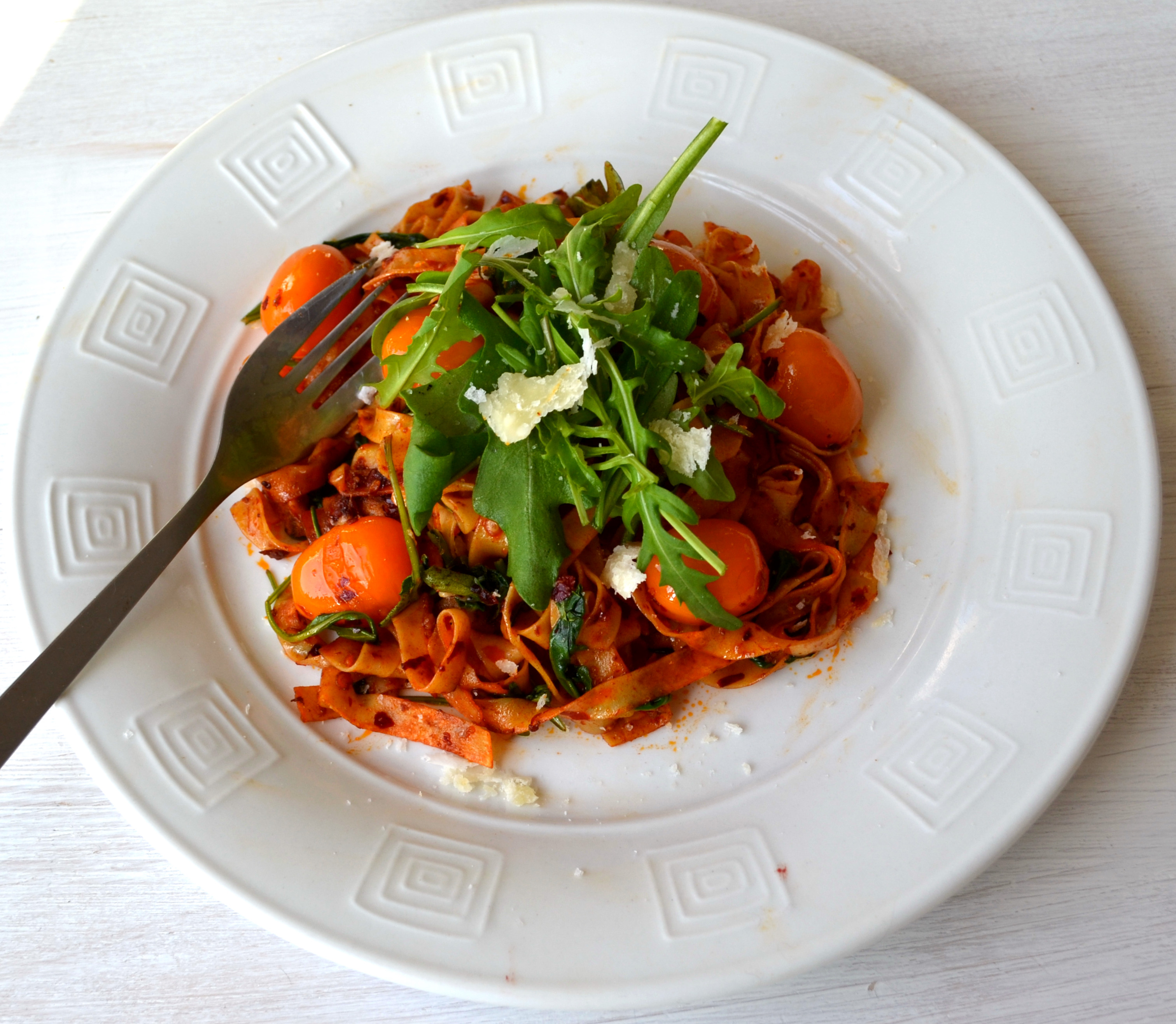
Duck Egg Pasta with ‘Nduja Sausage, Grape Tomatoes and Arugula

I am overjoyed! I finally got my camera back after a three-week separation. I picked it up from Parcelforce on Thursday, and on Friday, one of a spate of truly lovely spring days we’ve been enjoying in London, I went to Borough Market, a market I’ve avoided lately because I usually spend a fortune there on lovely food. (Friday was no exception.) A week or so ago I bought some duck eggs which I planned to use for fresh pasta, and in Borough Market I was looking for one product in particular: ‘Nduja sausage. ‘Nduja is a soft, spreadable Calabrian sausage loosely related to Andouille. It’s seasoned with fennel and oregano and Calabrian chilis – apparently it can contain up to 60% chilli peppers – and the chilis give it a beautiful deep red colour. It pairs naturally with pasta Continue reading