Apricot Caramel Upside-Down Cake

I’m one of those people who is chronically unable to accept compliments regarding my cooking. I can go further: I am a chronic apologist for my own food. This is such a consistent issue that I made a New Year’s resolution to apologize less and say thank you more.

Resolutions are great in theory but difficult to implement. Last Saturday I baked an apricot caramel upside-down cake for a party. Lovely friend Sophie helped herself to a slice and sat down beside me. “It’s a weird color because I used brown sugar,” I said. Sophie said nothing, and placed a small morsel in her mouth. “It looks dense, but that’s because the caramel soaked into the cake a little. I think I flipped it too early,” I said. With great concentration, Sophie continued to eat her cake. “I was hungover when I baked this cake, so I’m not sure if it’s my best effort,” I said. Sophie said nothing. She delicately took a bit of soft caramelized apricot on her fork and ate it. “Do you think it’s too sweet? I’m worried that it’s too sweet,” I said.

Sophie turned to me. “Let’s start this conversation again. This time, you will only praise your cake,” she said. I thought for a moment. “This is a beautiful cake,” I said. “The apricots are like a sunset over a South Pacific island, turning the water gold. The cake is like a perfumed Spring breeze, like happy memories of childhood,” I said. Sophie looked at me and laughed. She said, “Maybe you should say nothing at all. Then, when someone compliments your cake, you can say, ‘Thank you.’” Continue reading
Chłodnik (Chilled Polish Beet Soup)

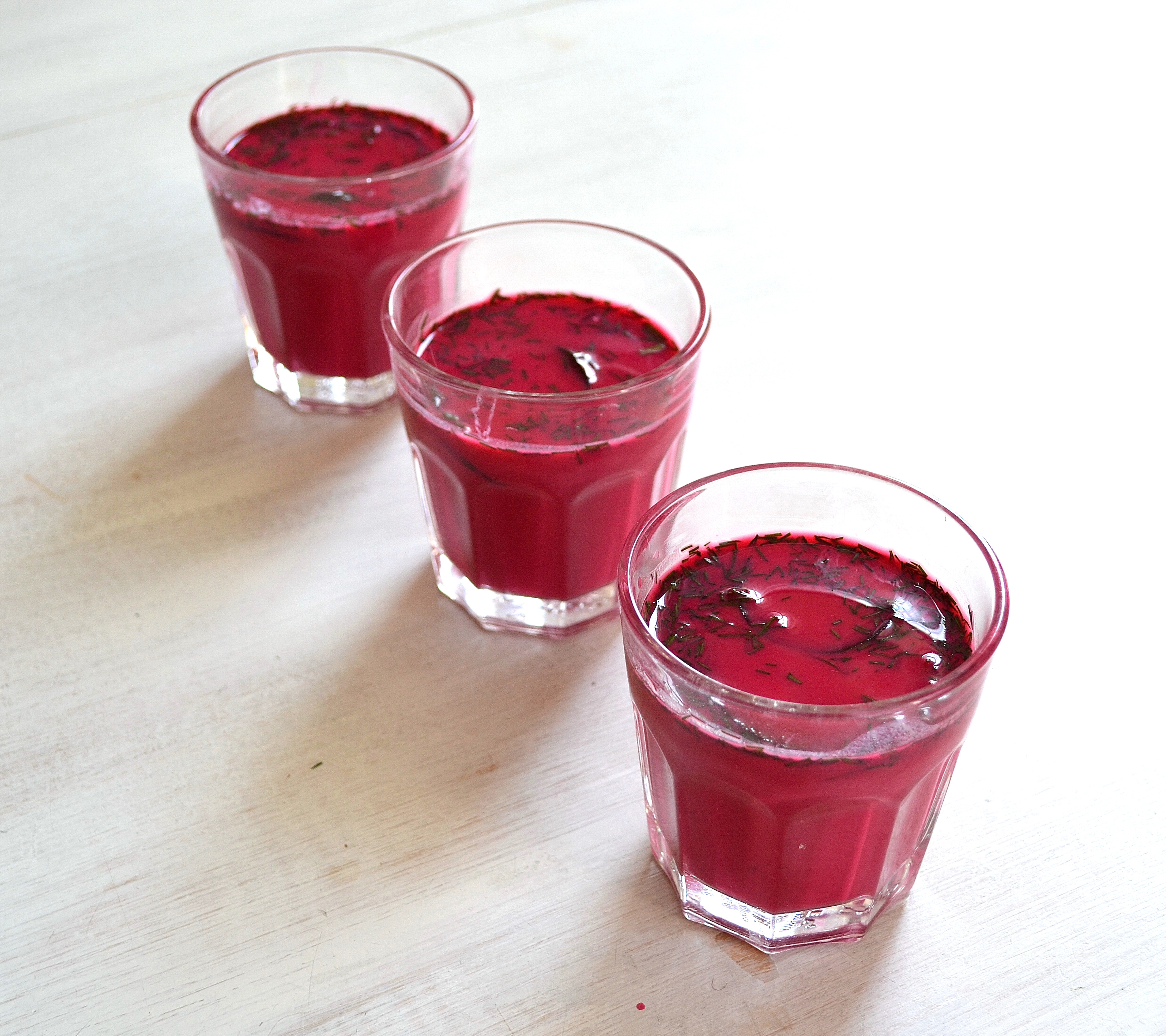
Apparently the propitiation of the sun gods has worked: London has finally gotten a real hit of summer this week, and what a glorious week it’s been. People here are giddy; delirious even. Bathed in lambent sunlight, the narrow passageways and brick soften. The city at once feels broader and more open, and more risqué. London’s decided to show some milky-white leg. My flat has windows that face east and west. In the winter, when the sun sets at four o’clock, these windows are a lifesaver. These past few days, however, the afternoon sun has baked my front room to a sub-tropical heat. Working at home, I douse my top in water (a trick I learned from a friend who had family in Death Valley) and type until the water evaporates.

When I lived in Seattle, during the hot summers (they can and do get hot) I’d make a soup that I knew of only as my mother’s cold summer beet soup. I’d make it by the pitcher, pour it into glasses, and drink it. When the pitcher was empty, I’d make another batch. Soon friends in the know would drop by for some in the afternoons. Vividly pink-magenta, this soup is delightfully sweet-tangy and refreshing; it gives gazpacho a run for its money. I only learned its Polish name when I decided to make it for this blog. Continue reading

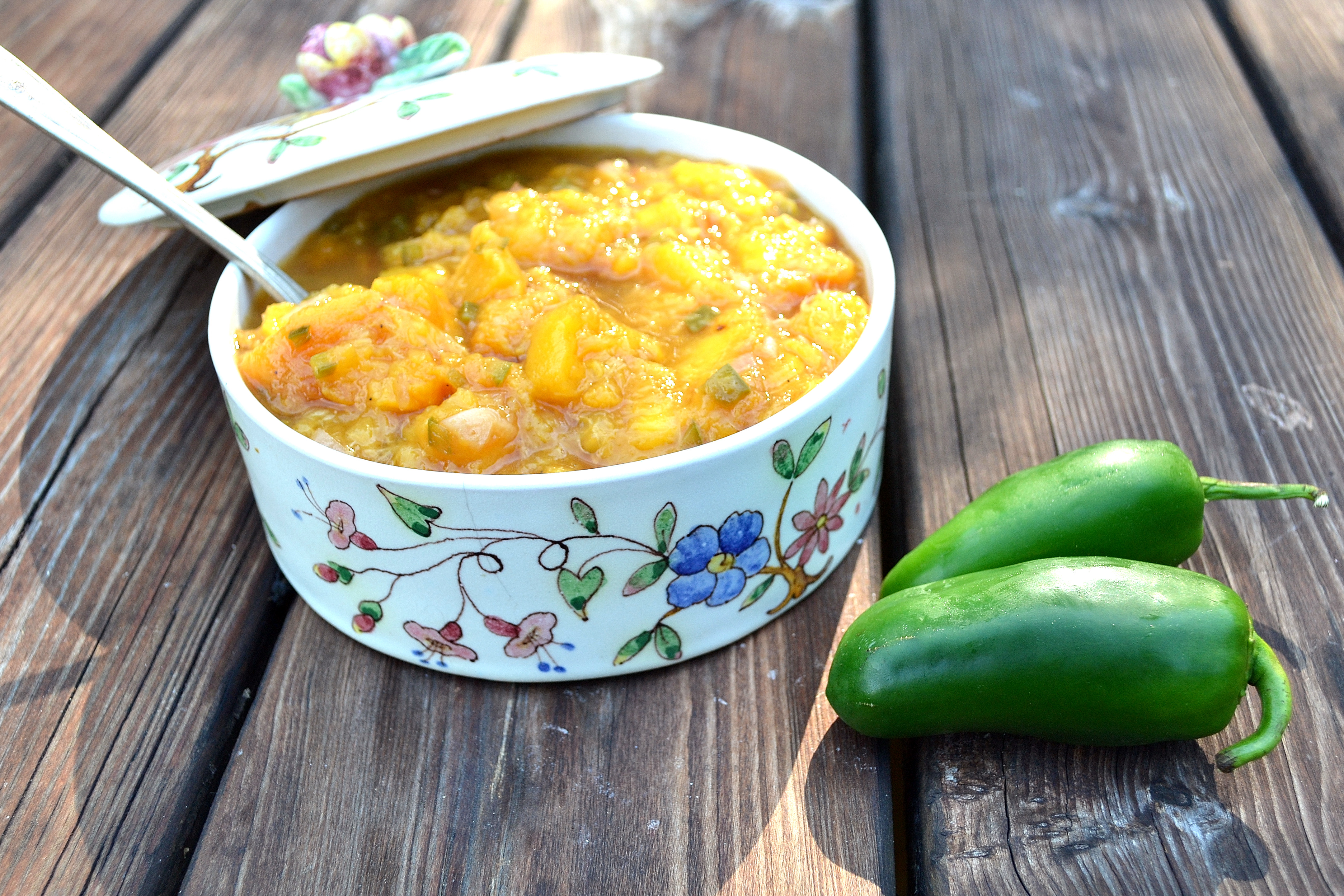
Grilled Peach Chutney

This summer I was deputized to take charge of my family’s Fourth of July dinner. As I am an obsessive and a planner, I decided what I would make weeks in advance: pork shoulder marinated in my homemade jerk sauce, then cooked in my dad’s smoker for eight or ten hours until it was meltingly tender. This is the kind of food project that appeals to me: slow cooking, with just enough wonky food science to cue in the never-distant internal third-person narrator. Also, in London, I don’t have a barbecue, so I have become increasingly fixated on the direct application of fire and smoke to food. Continue reading

Braised Baby Artichokes with Chestnut Honey and Thyme

In the microuniverse of blogging, there are few controversies more spirited than the debate over sponsored posts and advertising. I personally don’t like advertising banners and badges on blogs – they’re distracting, unsightly, and (perhaps irrationally) they make me slightly suspicious of the blogger. My attitude may be self-indulgent – after all, great segments of bloggers’ conferences are devoted to “monetizing” your blog. (I admit I have never been to a bloggers’ conference.) But I figure this is MY blog and I can do what I like with it. I sneeringly turned down advertisements from a reputable Large London Grocer and I have decidedly mixed feelings about blogging restaurant reviews from places that offer free meals in exchange for a review. (Chris, at Cheese and Biscuits, does a nice job of describing the queasy internal conflict that goes along with the freebie here. He gets way, WAY more freebies than I ever will.)

All that said, however, I have a slightly different attitude to products. I think this is probably because I make everything from scratch and it’s hard to hide behind a raw ingredient. Plus if I’m lucky it gives me the opportunity to cook with something that I might not otherwise have tried. I’m pretty choosy about what I’ll accept – I have to like the people that are offering the item to me; e.g., I have to respect their ethos and their approach to food-sourcing. But I was pretty excited when the nice folks at Seggiano (a small family-run Italian food importer) invited me to choose some items from their catalogue. A box duly was delivered on Monday, and yesterday I took a crack at creating a recipe from one of the most intriguing of the contents: chestnut honey. To be clear: I got the honey for free, but I am not otherwise being paid to write this post. Continue reading

Rhubarb Sour Cream Scones

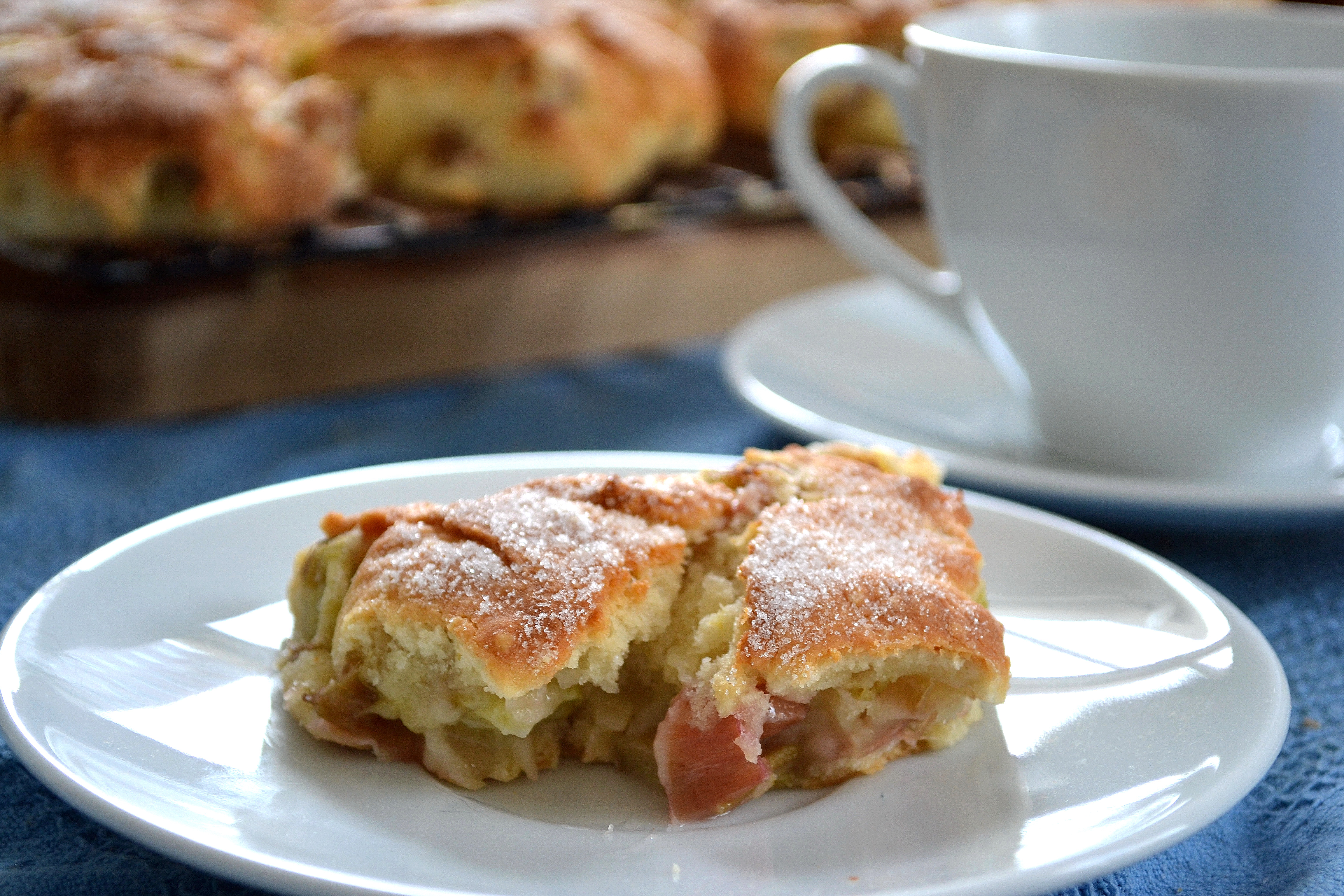
I have never been a fan of austerity in baking. Give me egg yolks. Give me butter. Give me cream or, better yet, give me buttercream. I don’t want to eat dessert, I want Dessert with a capital D. Which is why, for many years, I did not understand the appeal of scones. My mother didn’t bake them, so the scones I ate were store-bought, dry, crumbly things, perhaps adorned with a few miserly flecks of dried currants, that stuck to the roof of my mouth like paste no matter how much jam I slathered on them.

Everything changed, however, when I made cream scones for the first time. Oh how deliciously the crumbs of butter and flour clung together, moistened by thick cold cream. Folded with fresh berries, baked until golden brown, and served warm with (yes!) more butter and jam, cream scones were (and still are) my idea of heaven. Continue reading

Toasted Bulghur Salad with Spring Vegetables and Lemon-Tahini Dressing

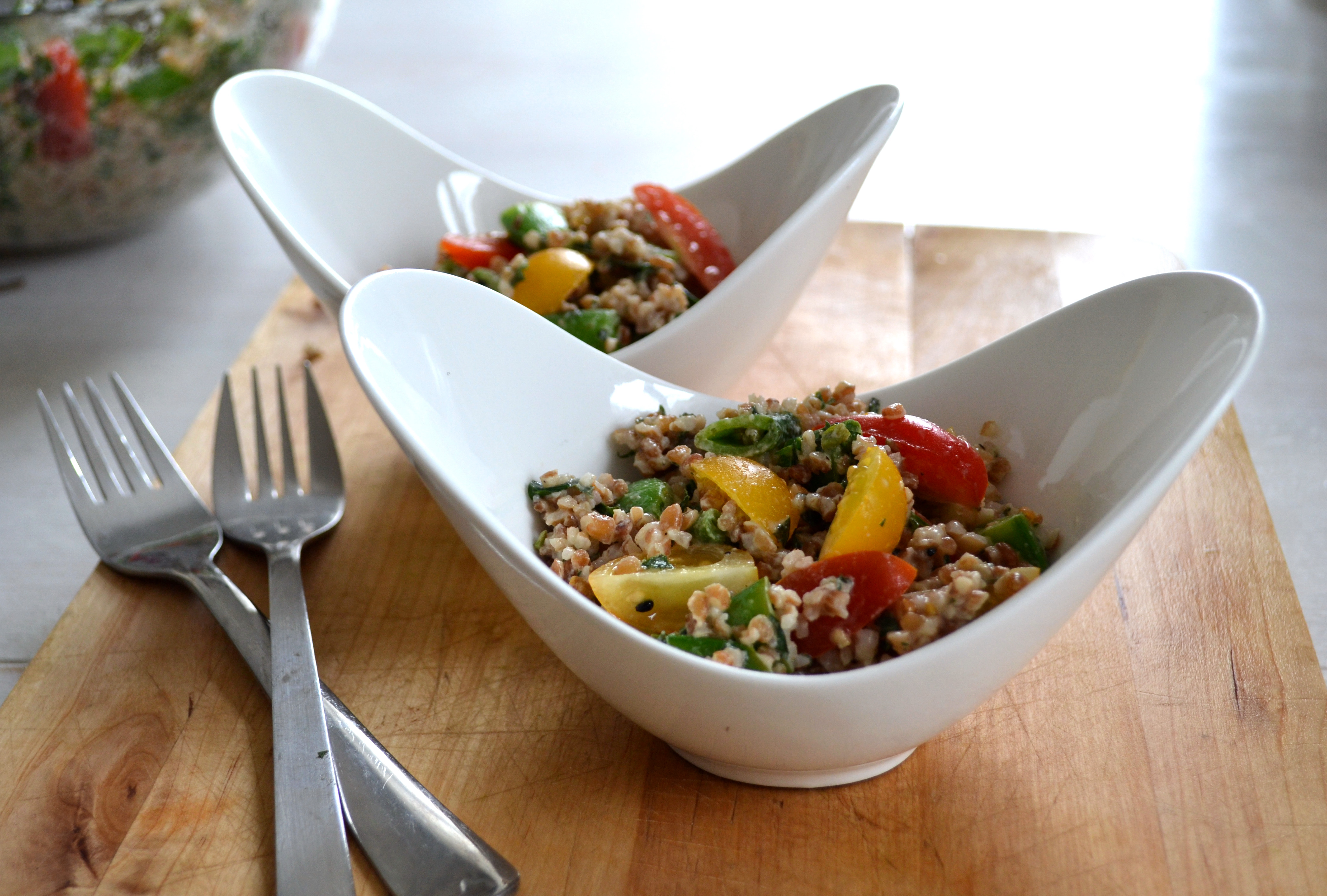
In London we have had one of the coldest, wettest springs on record. This morning when I went to the Marylebone Farmer’s Market people were heroically sitting in the nearby park wearing wool hats and scarves. I was wearing a winter jacket, and I was still chilly. Nevertheless, my circadian clock tells me summer is coming, or at least I think that’s why I have stopped craving big dark wintry stews and instead hanker after light fresh-tasting salads. This bulghur salad is a request from my sister. (I LOVE getting requests for recipes.) She apparently has a lot of bulghur in her pantry, and as it happens so do I: last week I crankily picked up a sack of coarse bulghur for 70 p from one of the innumerable Middle Eastern groceries that dot northwest London so I could meet the £5 minimum to use my credit card. But how fortuitous! I love this salad. Continue reading

Duck Tagine with Quince and Apricots

A very dear friend once said to me, after I’d served her a pigeon salad with orange and figs, “Susan, you pair meat with fruit more than anyone I know.” This is one of my favourite observations anyone has ever made about my cooking, and it is true that I love to pair meat with fruit.  That same friend is imminently expecting her first child, and I have been happily making and freezing meals for her and her partner in anticipation of their first couple of weeks at home with the baby. (I was born for this kind of task.) A few weeks ago, at Borough Market, which ordinarily is one of the most expensive food markets in London, I picked up three quinces for a pound. Earlier this week, I pounced on some Gressingham duck legs, which had been discounted at Waitrose. Gressingham duck is a cross between a wild mallard and a pekin duck, which means that it is a little bit less fatty than most duck you find in supermarkets, and its meat has a more gamey flavour. I use it whenever I can find it. Yesterday I emailed my friend, “I’m cooking you meat with fruit!”

This recipe is adapted from a lamb tagine I found in my favourite Moroccan cookbook, the marvellous Food of Morocco by Tess Mallos. Duck legs are browned in butter and then slowly stewed with saffron, coriander, ginger, onion, and cinnamon, and finished with meaty, tangy quince and sweet dried apricots. Crushed red pepper adds just a hint of heat. I’d never cooked with quince before, although membrillo, the thick plum-coloured quince paste sold in Spain by the slab and served with salty cheeses, is one of my guilty pleasures. (You can find a recipe for membrillo here.) The fruit is very hard and has a dry tang to it (i.e., is not to be eaten raw), but when cooked becomes soft and tender, almost like cooked pear, and takes on a dusky pinky-orange hue. It’s perfect with meat. Continue reading

Rabbit Ragu

For a long time I didn’t ‘get’ rabbit. “It tastes just like chicken,” people told me. Why not eat chicken, then, I wondered. It was like frog’s legs (which, by the way, taste like chicken only if one imagines one’s chickens cold-blooded and amphibious). I.e., it seemed to me like bourgeois foodie one-upmanship. And there’s the cute factor. When I tweeted about making this ragu, someone replied mournfully that their father had killed their pet rabbit and they never got over it. I too had a pet bunny as a child, and I have cats, and the little rabbit carcasses uncomfortably remind me of my kitties. But if you are a carnivore, wild rabbit is about the most sustainable meat you can eat. Rabbits breed, well, like bunnies (apparently a wild rabbit will have five to six litters a season), unlike most animals we eat they spend their whole lives outdoors, they are killed humanely, and the meat consists entirely of lean white-meat protein. Rabbit beats all or almost all other lean meats for protein to fat ratio. In the UK, you can buy a whole two to three kilo wild rabbit for about £4, which, considering that nearly all of that is usable meat, is extraordinarily good value for those of us trying to cook well on a budget. And rabbit doesn’t really taste like chicken, any more than monkfish tastes like lobster.

When I’m cooking lean gamey muscular meat, I like to do three things to it, usually in this order: marinate it; braise it; and stew it. It’s a lengthy process, but once you’ve determinedly battered at the collagens with low, slow cooking, the meat relaxes, absorbs all the delicious braising juices, and attains mythic proportions of deliciousness. The first time I cooked a rabbit ragu I was astonished by how flavourful it was. The meat stood up to the rich sauce, maintaining its density and distinct, subtle flavour. The first time I cooked a rabbit ragu was also the first time I jointed a rabbit. Nobody had ever showed me how, and it’s possible that actual butchers and chefs would throw up their hands in disgust at my efforts, but it wasn’t too difficult.

When you are buying a rabbit (if you’re motivated by environmental concerns, do cook wild rabbit – farmed rabbits have almost the same impact on the environment as farmed chickens), look for a rabbit with firm, dark-pink flesh and a sweet smell. Rabbits shouldn’t smell particularly gamey. You probably will start out with something that looks like this (tender-hearted vegetarians, don’t read further; this blog post has bunny carcass photos): Continue reading

Foraging and Cooking with Wild Garlic

Last week a new friend of mine, Nicola (a brilliant cook and blogger in her own right), crowed on Twitter about a recent discovery: she’d found loads of wild garlic at a Secret Location. I immediately demanded to be taken to the spot. She agreed, but not before exacting a “wild garlic tax” (some of my orange-blossom-saffron-vanilla macarons). It was an easy trade. I adore wild garlic. Wild garlic, also known as ramps, wild leek, and wood leek, grows in cool damp woody areas. Its colour is strikingly chlorophyll green and it’s got a sharp allium flavour and intense aroma. It’s gorgeous stuff. Monday, the appointed day, was cool and very wet. Nicola picked me up from an Overground station, her sweet and excitable dog, Toro, in the back of the car, and drove us to the Secret Location, a lovely wooded path Somewhere In London. Continue reading

Orange Blossom-Saffron-Vanilla Macarons

I consider myself to be a fairly proficient baker, but I’ve always been intimidated by macarons. They are so dainty and beautiful, so difficult to get right, and so easy to get horribly wrong. I’ve had dreadful macarons at very posh restaurants.  I don’t care what anybody says, but it IS surprisingly hard to find a good macaron in the United States. On one memorable occasion I even had inferior macarons from Ladurée. And as for achieving perfection at home and hitting every note – the flawless shiny smooth patina on the shell, the well-risen feet, the ever-so-slightly crisp shell and perfectly yielding, tender interior . . . there is just so much to bollocks up. (I’d use a ruder word, but this is a family friendly site.) Literally for months I stalked macaron recipes online. There are hundreds, if not thousands. And SO much advice, much of it conflicting. To Italian meringue, or not to Italian meringue? Should I age my egg whites? What about the almond flour? Should I grind my own and/or air-dry it? Continue reading